Pseudo-hyperkalaemia secondary to prolonged transit time or poor storage conditions
Clinical Features
Muscle - weakness (legs > arms)
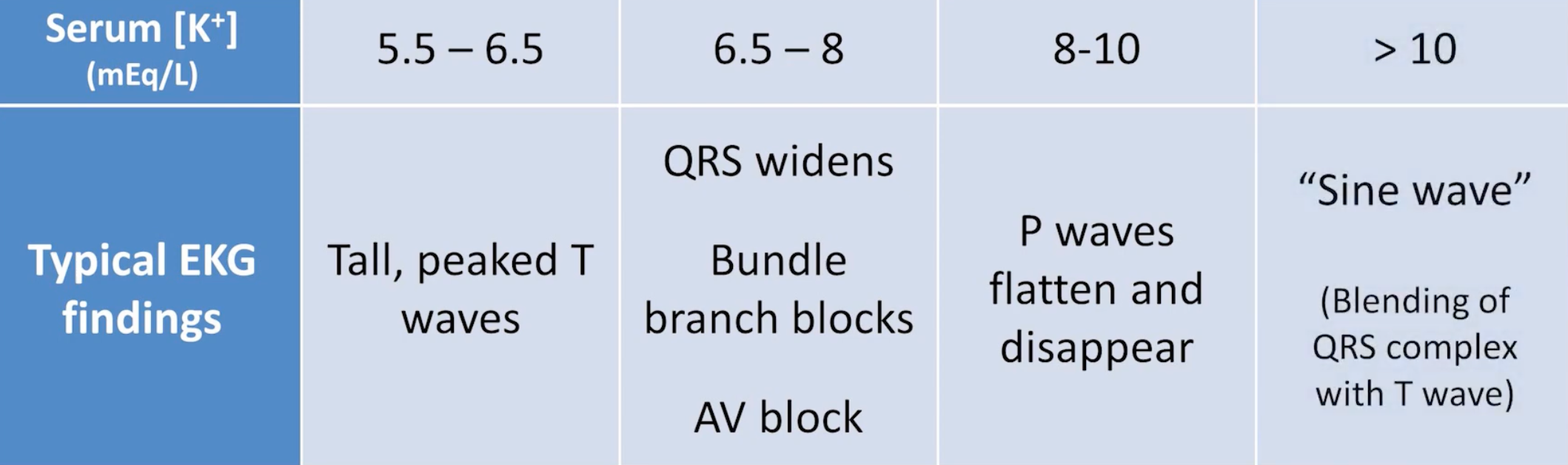
Cardiac conduction abnormalities
Workup
Exclude pseudohypohyperkalaemia
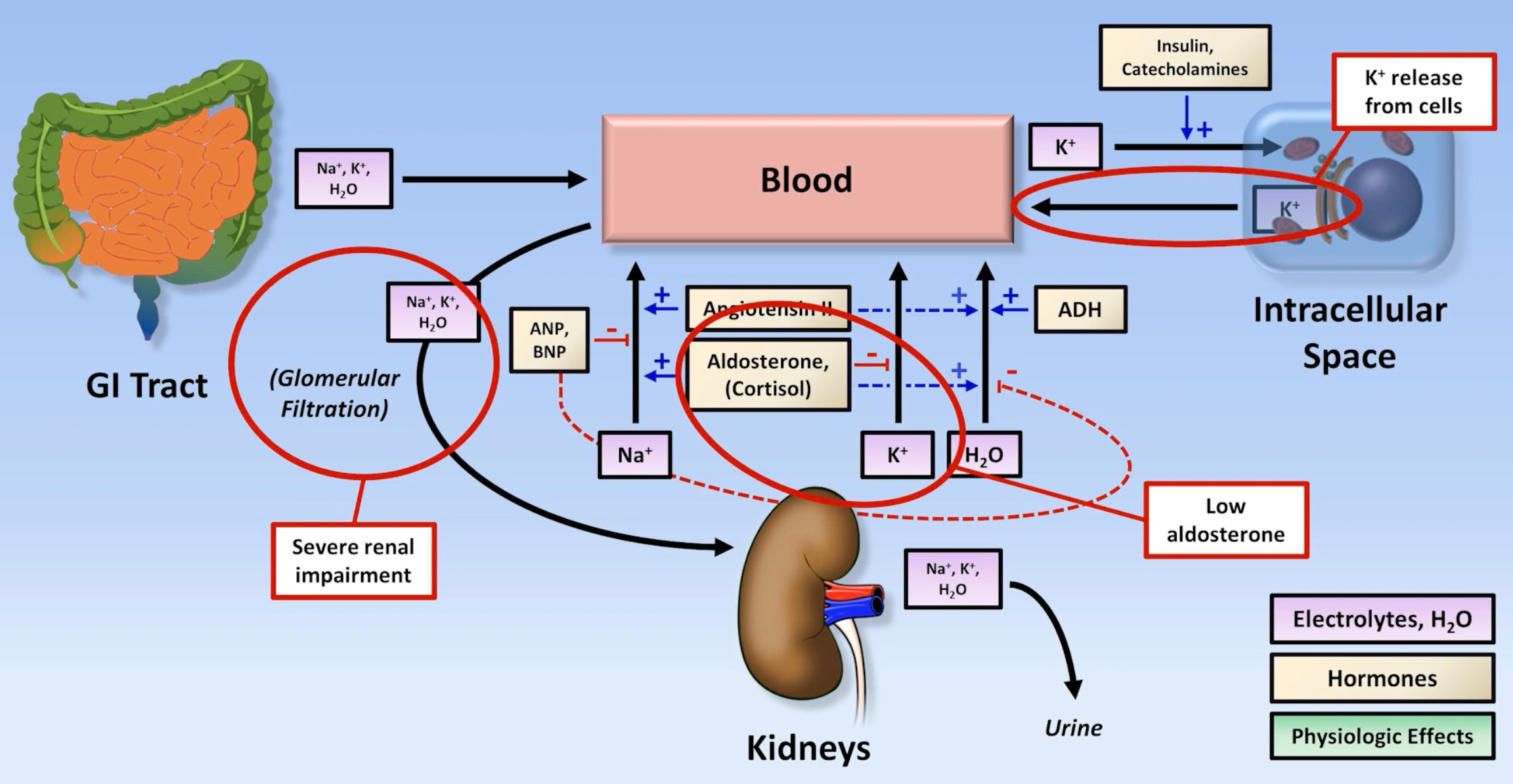
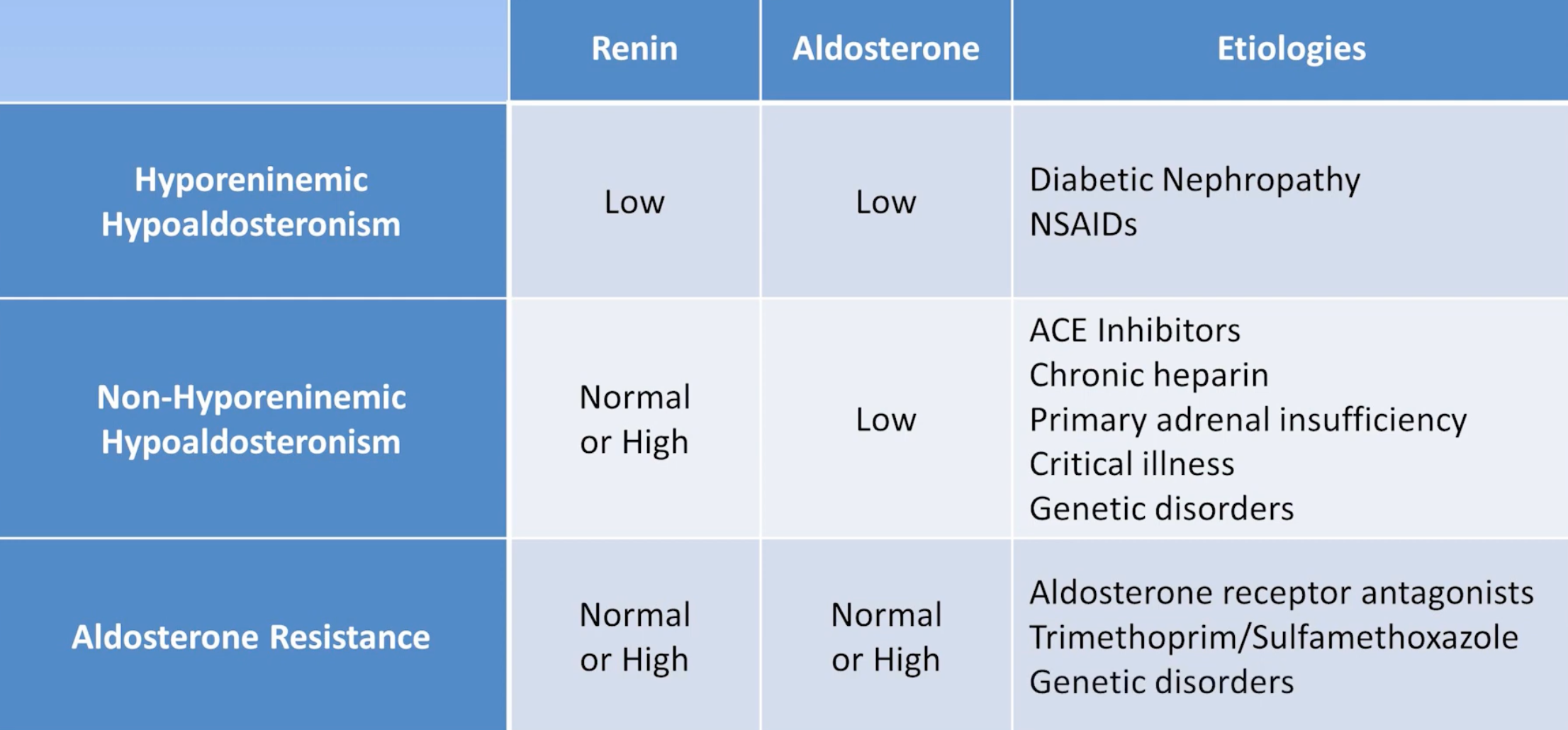
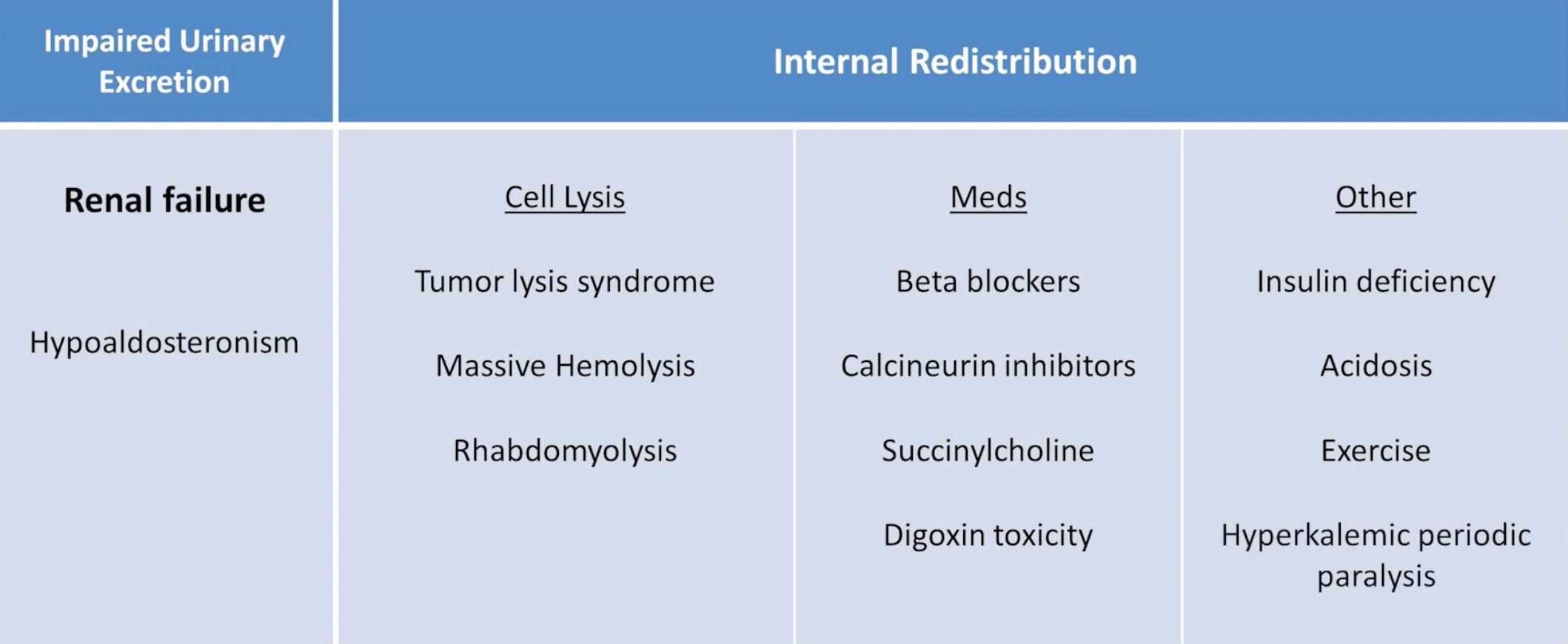
Evaluate renal function and medication list
Evaluate for hypoaldosternism by checking renin, aldosterone and cortisol
Management
Fluid resuscitation in order to enhance renal perfusion and elimination
Membrane stabilisation with calcium
5-10 mL of calcium 10% gluconate (2.2 mmol Ca ions) or 10% chloride (6.8 mmol Ca ions) over 2-5 minutes
Shift potassium into cells
Bicarbonate infusion 50-100mL of 8.4% (1 mmol/kg) IV over 5 minutes
Requires a metabolic acidosis to be present
Do not administer at same time as calcium as it can cause precipitation
Insulin/dextrose infusion
10U actrapid + 50mL of 50% glucose
Reduces potassium by 0.65-1 mmol/L/hr
Salbutamol nebulisers or IV
0.5 mg IV or 20 mg (2-4 nebs) nebulised
Increase potassium excretion
Diuretics
Mannitol and frusemide theoretically work but are not routinely used in hyperkalaemia management
Dialysis
Resonium
Rare side effect of intestinal necrosis in patients with bowel obstruction, ileus or opioid use
Hyperkalaemic Cardiac Arrest
Give 10 mL of 10% calcium chloride IV by rapid bolus injection (calcium gluconate when chloride not available noting that it has 1/3 calcium ions)
Give insulin 10 units (actrapid) and 25 g glucose IV by rapid injectiona
Give sodium bicarbonate 50mmol IV by rapid injection if severe acidosis or renal failure (do not give by the same line as the calcium chloride)
Consider dialysis
Adrenaline may help drive potassium down
Cardiac Arrest During Dialysis
Start resuscitation as per standard ALS pathway
Assign a dialysis nurse to the machine to:
Stop ultrafiltration
Give a fluid bolus
Return the patient’s blood volume and disconnect from the dialysis machine
Leave dialysis access open and use for drug administration
Urgent defibrillation (VF, pVT) is common in haemodialysis patients (most machines recommend discconection from the dialysis equipment prior to defibrillation)